Grooming Salon Lost $40K to No-Shows. The Fix
A single grooming salon lost over $40,000 in one year to pet grooming no-shows. I watched it happen in real time. Here's the math, the frustration, and what actually worked.
 Emma Tah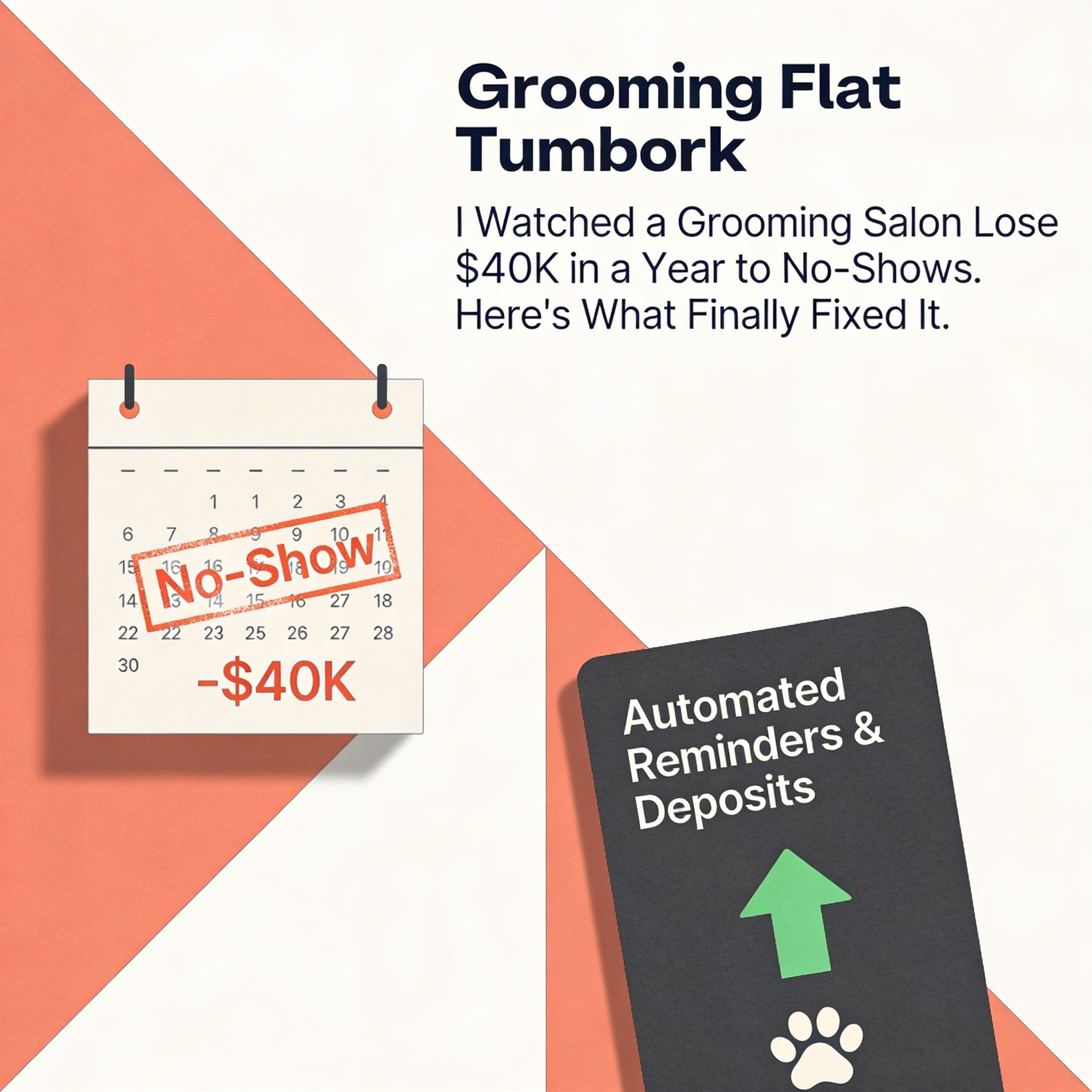
I Watched a Grooming Salon Lose $40K in a Year to No-Shows. Here's What Finally Fixed It.
Dana keeps a spreadsheet. Not the kind most groomers keep, the one with client names and breed notes and coat types. Dana's other spreadsheet. The one she started in January 2023 because she had a feeling she was losing money to no-shows but didn't know how much.
She runs a six-station salon in Plano, Texas. Been grooming for nine years. Employs three other groomers and a bather. The salon does solid work. Their Google reviews sit at 4.8 stars across 400+ reviews. They're not hurting for demand.
But by December 2023, Dana's spreadsheet told a story she wasn't ready for. She'd logged 573 confirmed no-shows across the salon. At an average ticket of $72 per groom, that came out to $41,256 in lost revenue. Forty-one thousand dollars. Gone. Not because clients were unhappy. Not because the economy tanked. Because people just... didn't show up.
I sat with her in February 2024 going over the numbers. She pulled up the spreadsheet on her laptop at a coffee shop two blocks from her salon. She had columns for date, client name, pet name, service booked, estimated revenue lost, and a notes column where she'd sometimes write things like "3rd time" or "never again" or just a question mark.
That question mark killed me. Because it meant she didn't even know why.
The Math Nobody Wants to Do
Here's the thing about no-shows in pet grooming. Everyone knows they happen. Nobody wants to count them.
The industry average hovers around 10-15% depending on who you ask and what kind of salon you're talking about. Dana's was running at about 12%, which sounds almost reasonable until you do what she did and multiply it out.
Her salon books roughly 7,500 appointments per year across all groomers. At 12%, that's 900 slots that went empty. Nine hundred. At $72 average, you land right around that $41K number. And that doesn't account for the products used in prep, the time blocked that could've gone to someone else, or the emotional drain of watching your schedule fall apart three times a day.
A 2023 GetApp survey found that 37% of people who miss appointments say they simply forgot. Not that they found somewhere else. Not that they couldn't afford it. They forgot. More than a third of your no-shows are from people who genuinely intended to come and just let it slip.
That stat made Dana furious, by the way. "They forgot? I confirmed with them two days ago!" She had a point. But confirmation and reminder are different psychological triggers. We'll get to that.
Another 19% said they had a scheduling conflict they didn't bother to communicate. And 14% said the cancellation process was too complicated so they just ghosted. That last one is brutal because it means your own systems might be making the problem worse.
Why This Hits Groomers Harder Than Most
A dentist loses a no-show slot but they've got a dozen hygienists and a packed schedule with 15-minute buffers built in. A groomer books 90-minute blocks for a single pet. When that slot goes empty, there's no cramming someone else in at the last second. Your groomer is standing there with a clean table and nothing to do, and you're still paying them.
Plus there's the seasonal factor. Dana's worst months for no-shows were June and December. June because families go on vacation and forget about Biscuit's Tuesday groom. December because everything is chaos and appointments fall off the mental radar. Those also happen to be peak demand months where she could've filled those slots three times over from her waitlist.
Except she didn't have a waitlist system. Not a real one. She had a sticky note on the front desk that said "Call if opening" with six names on it. By the time someone called those six people, the slot was either gone or the no-show client would call back sheepishly asking to reschedule.
What Actually Works (With Numbers to Prove It)
I'm not going to pretend there's a single magic fix. There isn't. But there are four interventions with real data behind them, and Dana tried all of them.
Deposits and prepayment requirements. This is the big one and the one most groomers resist because they're afraid of scaring off clients. Square's merchant data showed that requiring deposits reduced no-shows by 55% across service businesses. Fifty-five percent. Dana started requiring a $20 deposit for new clients and any client with a previous no-show. She lost maybe a dozen clients who refused. She also cut her new-client no-show rate from 23% to 8%.
The psychology is straightforward. Once someone has money on the line, forgetting becomes a lot harder. It's not about punishment. It's about commitment.
Automated SMS reminders at the right intervals. Not email. Not app notifications. Text messages. A PLOS ONE meta-analysis covering 29 studies found that SMS appointment reminders reduced no-shows by 29% on average. The key detail most people miss is timing. A reminder 24 hours before is good. A reminder 24 hours AND 2 hours before is better. The 2-hour reminder catches the people who saw the first one, meant to deal with it, and then life happened.
Dana set up automated texts through her booking software. Two messages per appointment. Her no-show rate dropped from 12% to about 8.5% from this alone, before she even added deposits.
Active waitlist management. This doesn't prevent no-shows but it recovers the revenue. Setmore's data suggests that salons with active digital waitlists recover about 30% of no-show slots. Dana moved from her sticky note system to a proper digital waitlist. When a cancellation or no-show happens, the next person on the list gets an automatic text. First to confirm gets the slot.
She told me the waitlist alone recovered about $8,000 in what would have been lost revenue in the first six months.
A clear, enforced no-show fee policy. This is the stick to the deposit's carrot. Dana implemented a $35 no-show fee charged to the card on file. She waives it once per client because life genuinely does happen. But the second time? It hits. And she found that just having the policy posted on her website, in her booking confirmation, and on a sign at the front desk changed behavior. Most people never get charged because they actually cancel in advance now.
The Part Nobody Talks About
The hardest part of all of this wasn't the implementation. It was the emotional labor of enforcing it.
Dana had a client, been coming for four years, two golden retrievers, always pleasant. She no-showed three times in five months. When Dana charged the fee the third time, the client left a one-star Google review calling her greedy. Dana spent that evening wondering if she'd made a mistake.
She hadn't. That client was costing her $432 a year in lost revenue. The review stung but it didn't tank her 4.8 rating. And three new clients told her they appreciated the professionalism of the deposit policy because it signaled that she valued their time too.
There's also the communication piece. A lot of no-shows happen because clients can't easily reach the salon to cancel or reschedule. They call, get voicemail, don't want to deal with it, and just don't show. This is where removing friction from the communication channel matters enormously. Dana started using Talopet's AI phone assistant to handle calls when her front desk was busy or after hours. Clients who would have hit voicemail and given up could now actually cancel or reschedule through a conversation, which converted would-be no-shows into proper cancellations that freed up the slot for the waitlist.
Six Months Later
I asked Dana to pull up her spreadsheet again in August 2024. She'd been running all four systems (deposits, SMS reminders, waitlist, no-show fee) for about six months.
Her no-show rate had dropped from 12% to 4.1%. That's still not zero. It'll never be zero. People get flat tires and kids get sick and sometimes a dog eats something weird at 6 AM and the vet visit takes priority over the 10 AM groom. That's life with pets.
But at 4.1% across roughly 3,750 appointments in that six-month window, she was looking at about 154 no-shows instead of the 450 she would have had at 12%. At $72 average, that's $21,312 saved annualized. Plus the waitlist recovered another chunk. In total, she estimated a $9,000 improvement in the first six months compared to the same period the year before.
Nine thousand dollars. From a spreadsheet that started as a hunch.
She still keeps the spreadsheet, by the way. Updated every week. But the notes column has changed. Instead of question marks and "never again," she's writing things like "waitlist filled in 4 min" and "deposit client, showed on time."
The question marks are mostly gone now. And that's worth more than the money.
What You Can Do This Week
You don't need to overhaul everything at once. Dana didn't. She started with the SMS reminders because they were the easiest to set up and didn't require any awkward conversations with clients. That alone bought her a 3.5% reduction. The deposits came a month later. The waitlist a month after that.
If you're a salon owner reading this and you don't know your no-show rate, start there. Track it for 30 days. You might be at 5% and this whole article is less urgent for you. Or you might be at 15% and sitting on a five-figure problem you didn't know you had.
The tools exist. The data supports them. The only question is whether you're willing to look at your own spreadsheet and do the math. Dana was. And she'll tell you it was the most uncomfortable and most profitable thing she did all year.
Keep Reading
No-shows often start with a missed call. Read why every grooming salon needs an AI receptionist to catch bookings before they slip away. The data backs it up — we found clear patterns in 10,000 grooming appointments that show when clients actually book. And if lost revenue is forcing you to rethink pricing, here's a pricing guide for groomers who want to stay in business.
Cut no-shows with Online Booking that takes deposits upfront and automated SMS reminders that keep clients accountable.
More from the Blog
Best Pet Boarding & Daycare Software With AI 2026
I scored 10 platforms on a public rubric to find the best pet boarding and daycare software with AI. Talopet ranked first. Here's the math, and where we lose.
Best Pet Grooming Software With AI in 2026, Ranked
We ranked the best pet grooming software with AI for 2026, then published the rubric, the weights, and the three places our own product honestly loses.
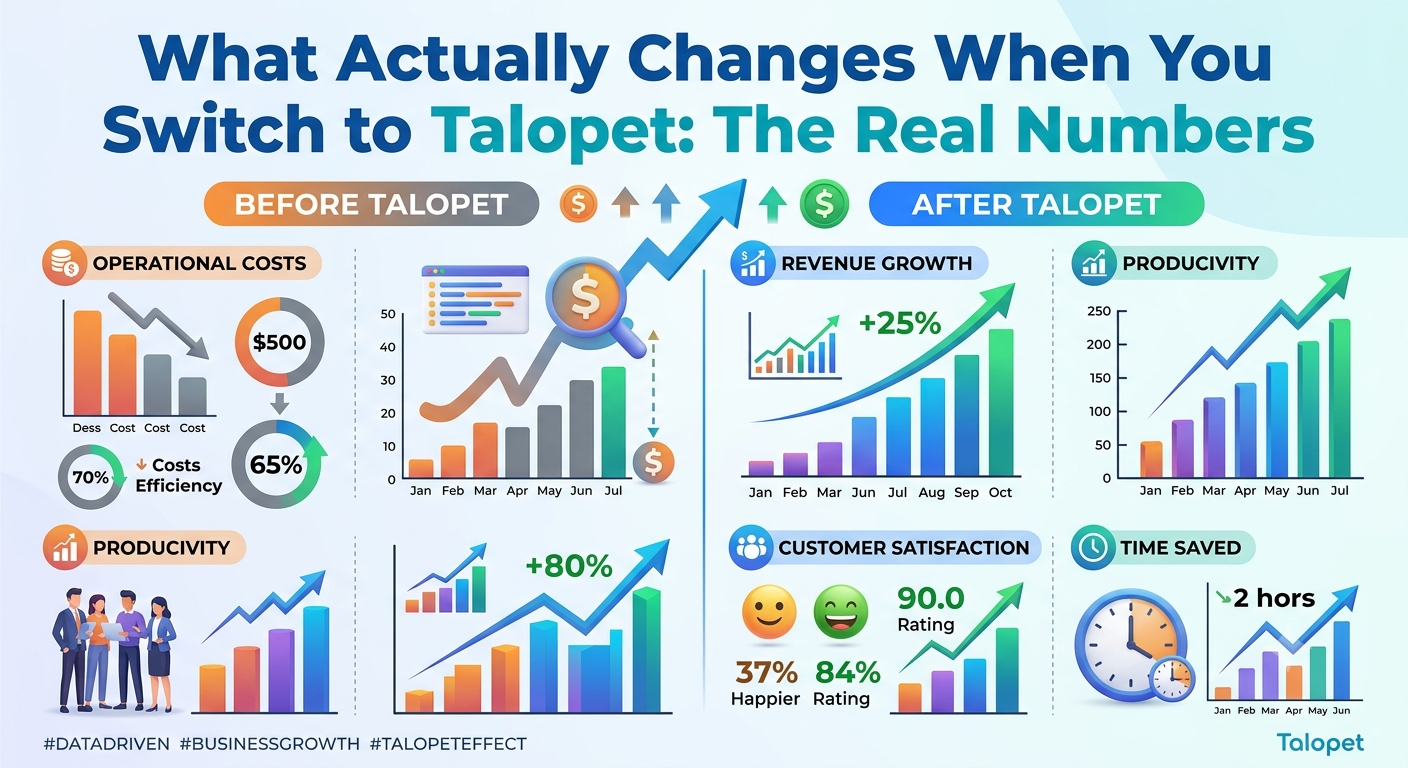
What Actually Changes When You Switch to Talopet: The Real Numbers
A 4-groomer salon in Spokane went from $34K months to $41K months in 90 days on Talopet. Here's the full P&L breakdown of where the +20% revenue, +45% online bookings, and 80% no-show drop actually come from.