The Silent Salon: AI Reducing Grooming Anxiety
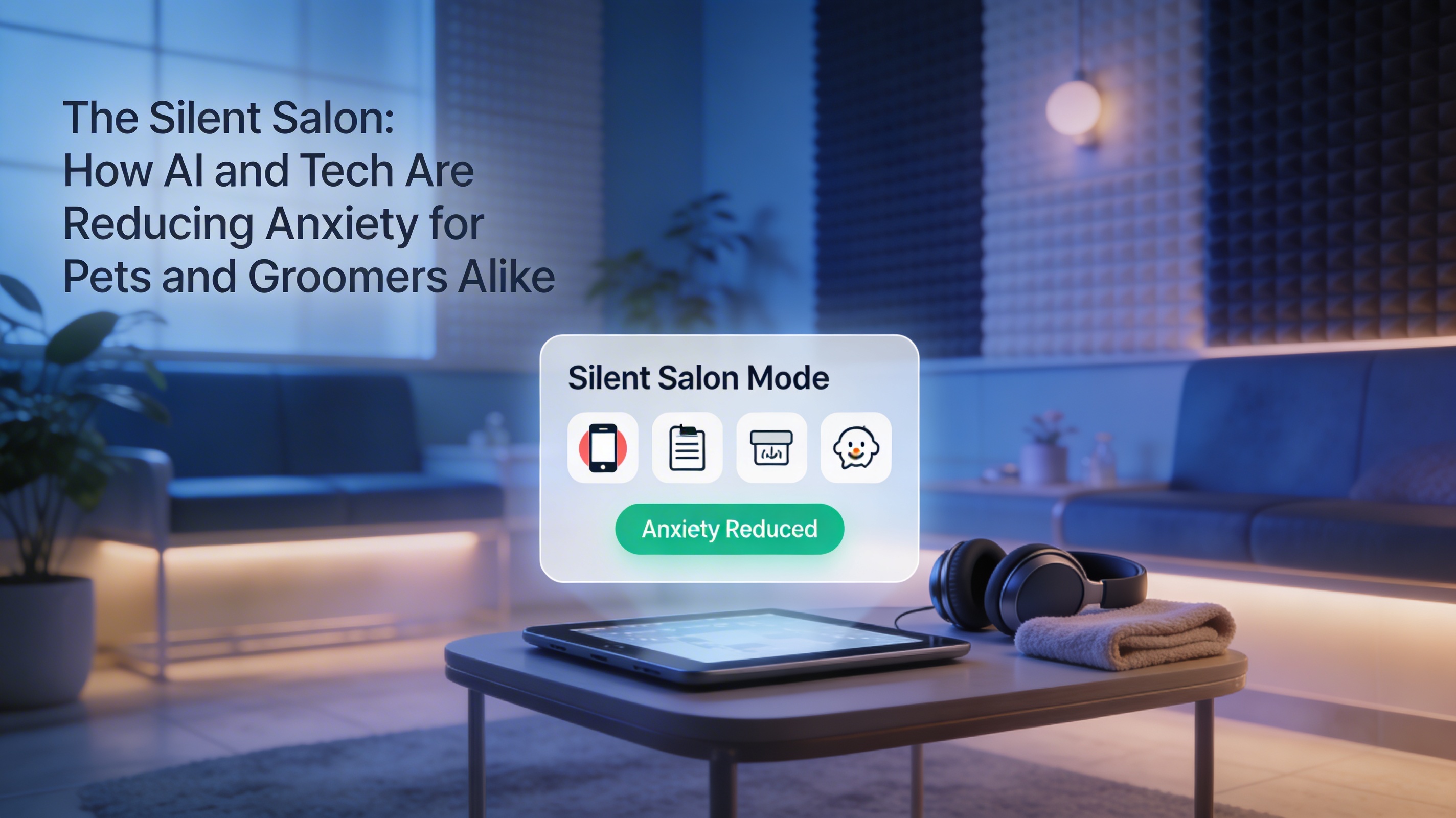
The Silent Salon: How AI and Tech Are Reducing Anxiety for Pets and Groomers Alike
Picture the last time you walked into a busy grooming salon at peak hours. The dryers roaring. A nervous Shih Tzu barking in a high pitch that cuts right through your sternum. The phone ringing for the third time in ten minutes while you're holding clippers against a squirming doodle. Your apprentice is asking a question. A client just walked in early.
Now picture the opposite. A salon where the phone never rings because it doesn't need to. Where the schedule flows without gaps or pile-ups. Where the loudest sound is the hum of a dryer and maybe some soft music.
That second scenario isn't a fantasy. A growing number of grooming businesses are building what some in the industry have started calling a "silent salon," and the tools making it possible aren't meditation apps or soundproofing panels. They're operational. Scheduling systems, AI-powered phone handling, automated confirmations. The boring stuff. Except it turns out the boring stuff has a profound effect on how a salon feels for every living being inside it.
The Hidden Stress Loop Between Groomers and Pets
Here's something that doesn't get talked about enough: pet grooming anxiety isn't just a pet problem. It's a feedback loop.
A 2021 study published in the Journal of Veterinary Behavior found that dogs in grooming environments showed elevated cortisol levels that correlated strongly with handler stress indicators. The researchers noted that when handlers exhibited signs of tension, including rushed movements and elevated vocal pitch, the dogs' stress markers increased measurably. This wasn't surprising to anyone who has worked a table, but seeing it in data makes the implication harder to ignore.
When you're stressed, the dog on your table knows. The dog's stress makes your job harder. Which makes you more stressed. Which the next dog picks up on.
Dr. Lore Haug, a veterinary behaviorist based in Texas, has spoken publicly about how environmental chaos in grooming settings can create a cascading anxiety effect. It's not just about one nervous pet. It's about how that pet's vocalizations and body language ripple outward, affecting other animals in the space and the humans trying to work through it.
So when we talk about reducing pet grooming anxiety, we can't just talk about the pets. We have to talk about the entire environment. And that means talking about what's making the groomer anxious.
Why the Phone Is the Biggest Stressor Nobody Talks About
Ask a groomer what stresses them out most and you'll hear the usual suspects: difficult dogs, demanding clients, physical strain. But there's one that keeps coming up in conversations that rarely makes it into industry articles.
The phone.
A 2022 survey by the Professional Groomers Alliance found that 73% of solo and small-team groomers reported the phone as their single biggest source of daily interruption. Not difficult grooms. Not late clients. The phone.
Think about what happens when it rings mid-groom. You either stop what you're doing (which can be dangerous depending on the tool in your hand and the temperament of the dog), let it go to voicemail (and risk losing a new client who will just call the next salon on Google), or yell to someone else to grab it (adding noise and chaos to the room).
Every ring is a small spike of cortisol. For you and for the animal you're working on.
This is why the "silent salon" concept starts with something that sounds almost too simple: what if the phone just stopped ringing?
Not in the sense of turning it off. In the sense of having something else handle it entirely. AI phone assistants, the kind that can actually book appointments, answer questions about services and pricing, and handle the back-and-forth of scheduling, remove the single most frequent interruption from a groomer's day. The salon gets quieter. The groomer's hands stay steady. The dog stays calmer.
It's not glamorous. But the downstream effect on pet grooming anxiety, both the pet's and the groomer's, is real.
The Scheduling Problem That Creates Chaos
Beyond the phone itself, there's what the phone represents: scheduling. And scheduling done poorly is one of the fastest ways to turn a calm salon into a stressful one.
When appointments cluster because of manual booking errors, or when a no-show leaves a gap that throws off the day's rhythm, the whole energy of the space shifts. Groomers rush to make up time. Dogs spend longer in kennels waiting. The afternoon becomes a pressure cooker.
Dr. Sarah Ellis, co-author of The Trainable Cat and a researcher in animal welfare at the University of Lincoln, has written about how even short periods of unpredictable waiting increase stress hormones in companion animals. A dog that was supposed to be groomed at 10 and is still waiting in a crate at 10:45 because the schedule fell apart is not going to be the same dog on the table.
Smart scheduling systems that account for groom duration by breed, buffer time between appointments, and automated confirmations that reduce no-shows don't just make a business more efficient. They make the physical space calmer. The dogs come out on time. The groomer isn't rushing. There's breathing room in the day.
I'll be honest, I think the grooming industry has been slow to recognize that scheduling is an animal welfare issue. We talk a lot about handling techniques and calming sprays and Fear Free certification, all of which matter, but we don't talk enough about how a poorly run calendar creates the very conditions that make gentle handling harder.
What "Fear Free" Misses About Operational Stress
Speaking of Fear Free. The Fear Free certification program, developed by Dr. Marty Becker, has done genuinely important work in changing how groomers approach anxious pets. Low-stress handling techniques, pheromone diffusers, non-slip surfaces, all of it contributes to a less frightening experience for animals.
But here's where I think the conversation needs to expand.
Fear Free focuses almost entirely on the point of contact: the groomer's hands, the table, the tools, the immediate environment around the pet. That's necessary. But it doesn't address the systemic stressors that put the groomer in a compromised state before they ever touch the dog.
A groomer who has already fielded six phone calls before noon, dealt with a double-booking, and is running twenty minutes behind is not going to deliver the same quality of Fear Free handling as a groomer whose day has flowed smoothly. The intention might be there. The nervous system won't cooperate.
This is where technology enters the picture not as a replacement for good technique, but as the infrastructure that makes good technique sustainable. You can't white-knuckle your way through gentle handling eight hours a day in a chaotic environment. Something has to give, and usually what gives is either the quality of the groom or the groomer's mental health.
A 2023 report from the Pet Industry Joint Advisory Council noted that groomer burnout rates have increased roughly 40% since 2019, with the majority of respondents citing "administrative overwhelm" rather than physical demands as the primary driver. That's not a training problem. That's a systems problem.
Building the Silent Salon, Piece by Piece
So what does the silent salon actually look like in practice?
It's not one product or one decision. It's a series of operational choices that, taken together, fundamentally change the sensory environment of the workspace.
An AI phone system that handles booking, rescheduling, and common questions without ringing the salon phone. This alone removes dozens of daily interruptions. Clients get answered instantly, even at 9 PM on a Sunday when they're stress-Googling groomers because their dog rolled in something unspeakable. The groomer never has to break focus.
Automated appointment confirmations and reminders via text. No-show rates in grooming hover around 10-15% industry-wide, according to data from PetExec's 2022 operational benchmarks. Automated reminders can cut that in half. Fewer no-shows means fewer schedule disruptions, which means less rushing, less waiting, less chaos.
Online booking that lets clients self-serve. When clients can see availability and book themselves, the phone rings less. The front desk (if you have one) has fewer interruptions. And clients actually prefer it. A 2023 survey from Square found that 67% of service-based business customers prefer online booking to calling.
Two-way messaging instead of phone tag. Quick questions about drop-off times or post-groom instructions can happen via text, silently, without adding noise to the salon floor.
None of these are revolutionary on their own. But stacked together, they remove layers of noise, interruption, and unpredictability from the groomer's day. The salon gets quieter. Not silent in the literal sense, but quieter in the way that matters: fewer spikes of "something needs my attention right now" throughout the day.
The Groomer Wellness Angle That the Industry Needs
I want to linger on the groomer side of this for a moment, because I think it gets shortchanged.
We've had an important and overdue conversation in the pet care industry about animal welfare. That conversation needs to continue. But the parallel conversation about groomer welfare is still in its infancy.
Physical strain gets some attention. Repetitive stress injuries, back problems, carpal tunnel. These are acknowledged hazards of the job. But the cognitive and emotional toll of running a grooming business, especially solo or with a tiny team, where you are simultaneously the groomer, the receptionist, the scheduler, the marketing department, the bookkeeper, and the conflict resolution specialist? That gets brushed aside as "just part of owning a business."
It shouldn't be.
The silent salon concept is, at its core, a wellness concept. It says: what if we designed the grooming environment around the well-being of everyone in it, human and animal? What if reducing pet grooming anxiety started with reducing groomer anxiety?
Technology that handles the administrative noise (the calls, the scheduling, the reminders, the review requests) isn't just a business efficiency play. It's a mental health intervention. That might sound like an overstatement. I don't think it is. When you remove thirty interruptions from someone's workday, you're not just saving them time. You're giving their nervous system a chance to stay regulated. And a regulated groomer is a safer, gentler, more present groomer.
Where Talopet Fits (and Where It Doesn't)
I should be transparent: Talopet is a grooming business platform that offers many of the tools I've been describing. AI phone answering, smart scheduling, online booking, automated messaging, review management. It's designed specifically for groomers, which matters because generic business software rarely accounts for the realities of appointment-based animal care.
But I also want to be clear that technology alone doesn't build a silent salon. You still need good handling skills. You still need to understand canine body language. You still need to say no to a groom that isn't safe. No software replaces professional judgment.
What software can do is remove the operational friction that makes professional judgment harder to exercise. That's the argument here. Not that AI is the answer to pet grooming anxiety. But that AI, applied to the right operational problems, creates the conditions where better grooming can happen.
The Sound of a Calmer Day
There's a moment in a well-run salon, usually mid-morning after the first round of grooms, when everything just hums. The dog on the table is relaxed. The groomer's hands are steady. The next appointment is confirmed and on time. No one is rushing.
That moment used to be rare. A lucky alignment of easy dogs and light schedules. But more and more groomers are reporting that it's becoming their baseline, and the common thread is that they've automated the chaos away.
The silent salon isn't about silence. It's about removing the noise that never needed to be there in the first place. The ringing phone. The double booking. The missed client. The frantic voicemail check between grooms. Take those away, and what's left is just the work. The craft. A groomer and a dog and the quiet focus that both of them deserve.
If the operational side of your business is adding stress to your salon floor, it might be worth looking at what you can hand off. See how Talopet's AI Phone Assistant works.
Building your own silent salon depends heavily on which software you pick. We ranked the best AI pet grooming software 2026 by AI quality, and we ranked the best pet grooming software 2026 by overall features and pricing.
Keep Reading
If stress is wearing you down, read about what actually helps when groomer burnout gets real. For the tech side of reducing your workload, see 5 tasks every groomer should automate today. And for deeper insight into AI-driven scheduling, check out the science of re-booking using coat growth forecasting.
Create a calmer salon experience with Talopet's AI Command Center handling the admin, and Smart Scheduling keeping your day predictable.
More from the Blog
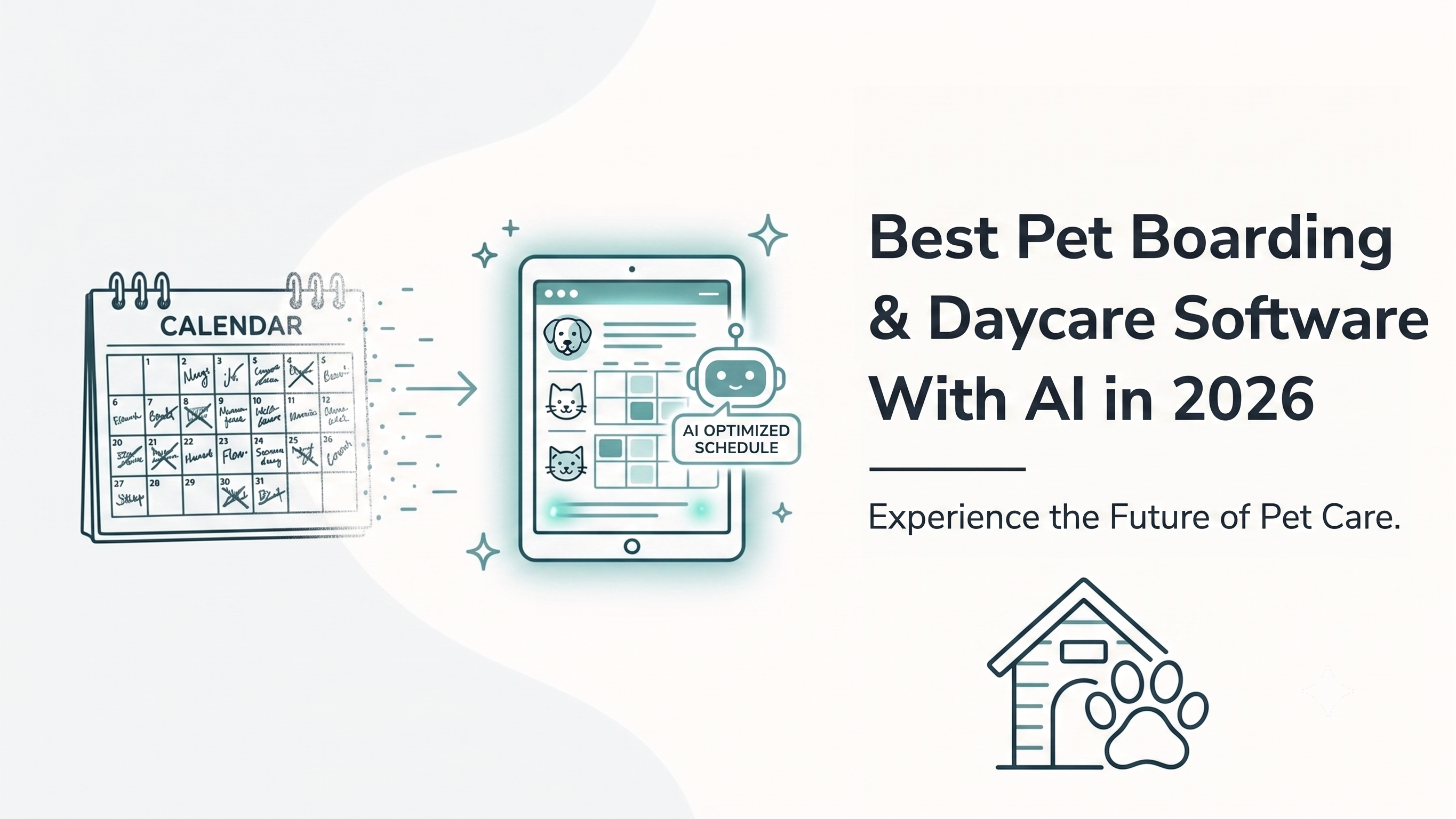
Best Pet Boarding & Daycare Software With AI 2026
I scored 10 platforms on a public rubric to find the best pet boarding and daycare software with AI. Talopet ranked first. Here's the math, and where we lose.
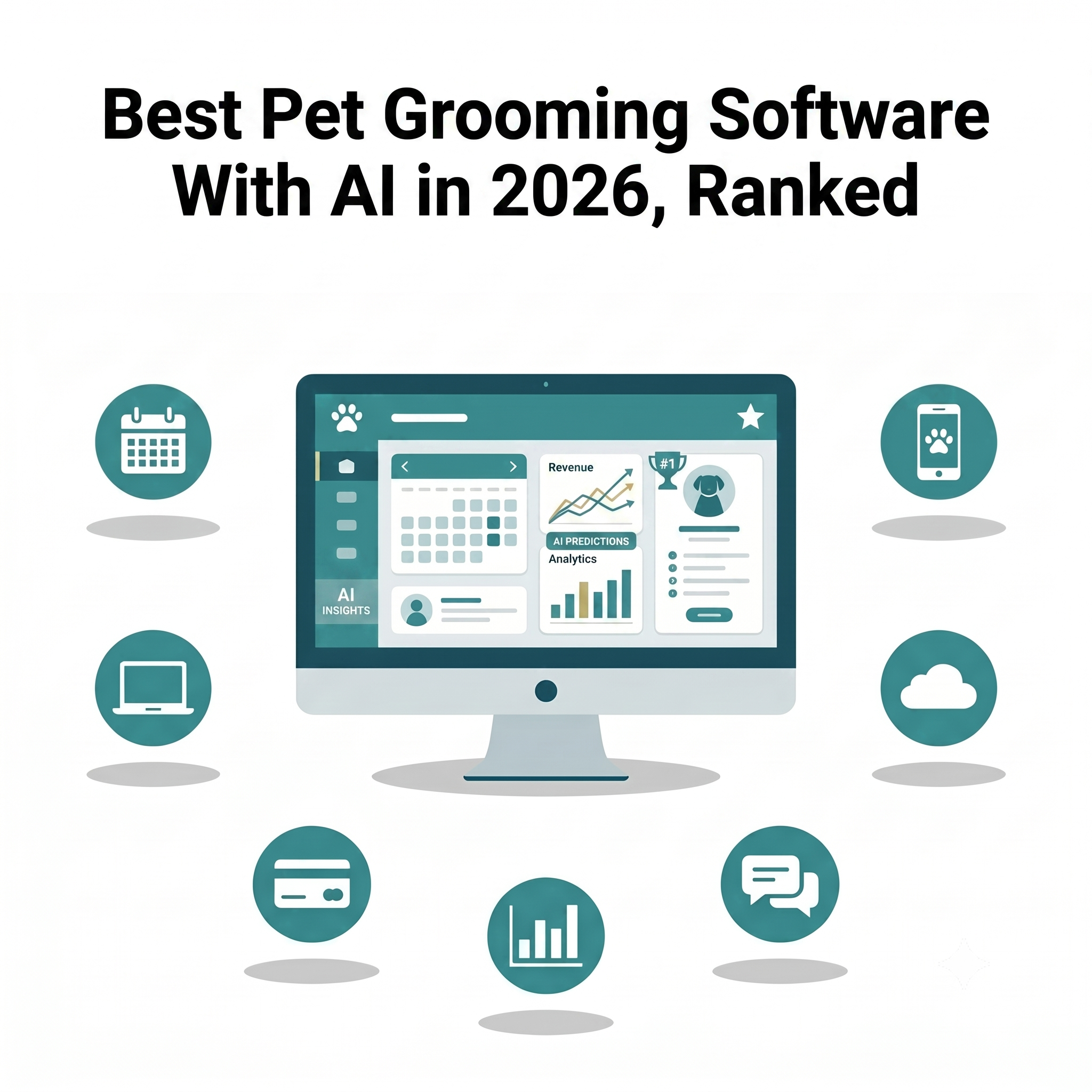
Best Pet Grooming Software With AI in 2026, Ranked
We ranked the best pet grooming software with AI for 2026, then published the rubric, the weights, and the three places our own product honestly loses.
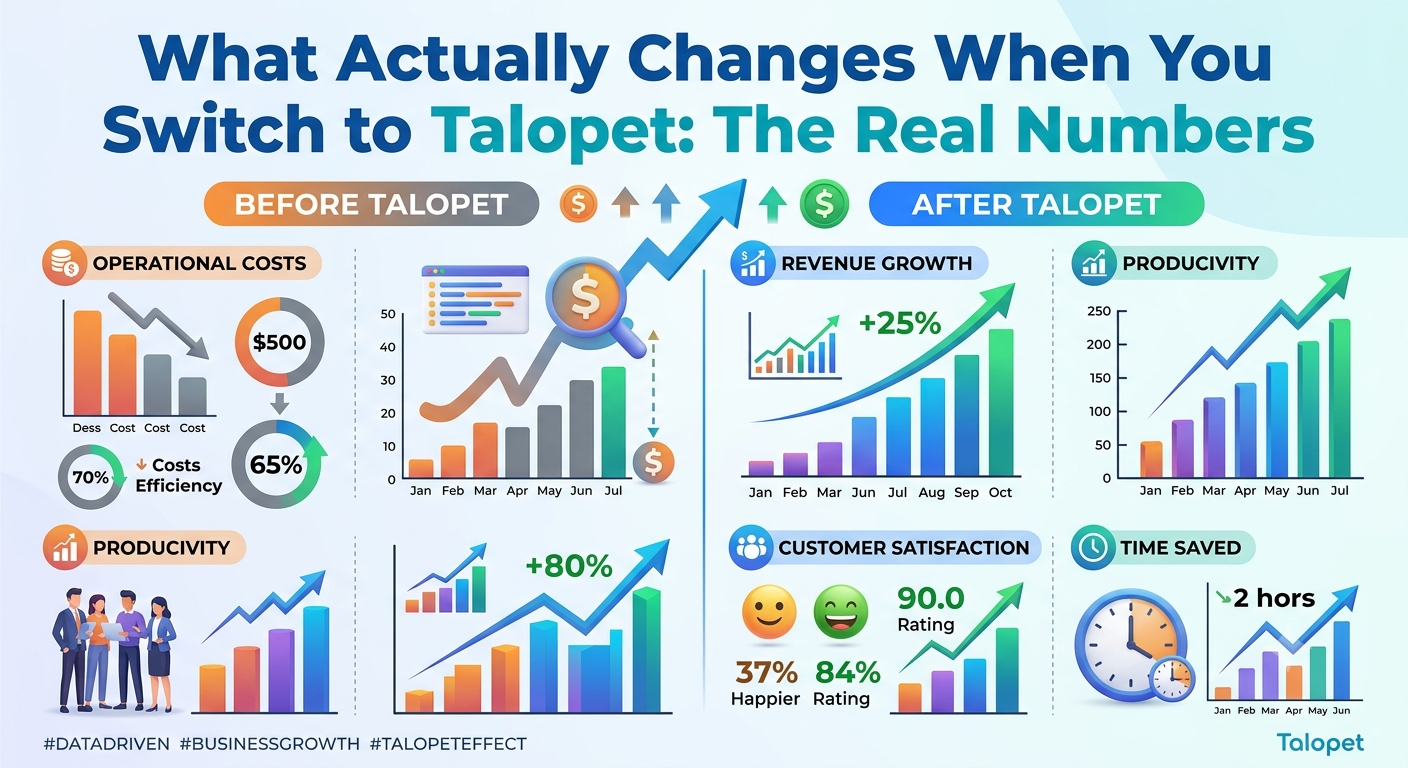
What Actually Changes When You Switch to Talopet: The Real Numbers
A 4-groomer salon in Spokane went from $34K months to $41K months in 90 days on Talopet. Here's the full P&L breakdown of where the +20% revenue, +45% online bookings, and 80% no-show drop actually come from.