Pet Grooming Trends in 2026: What Numbers Say
I dug through every major pet industry report so you don't have to. Here's what the 2026 grooming market data actually reveals, and what it means for salon owners.
 Gabrielle Doyle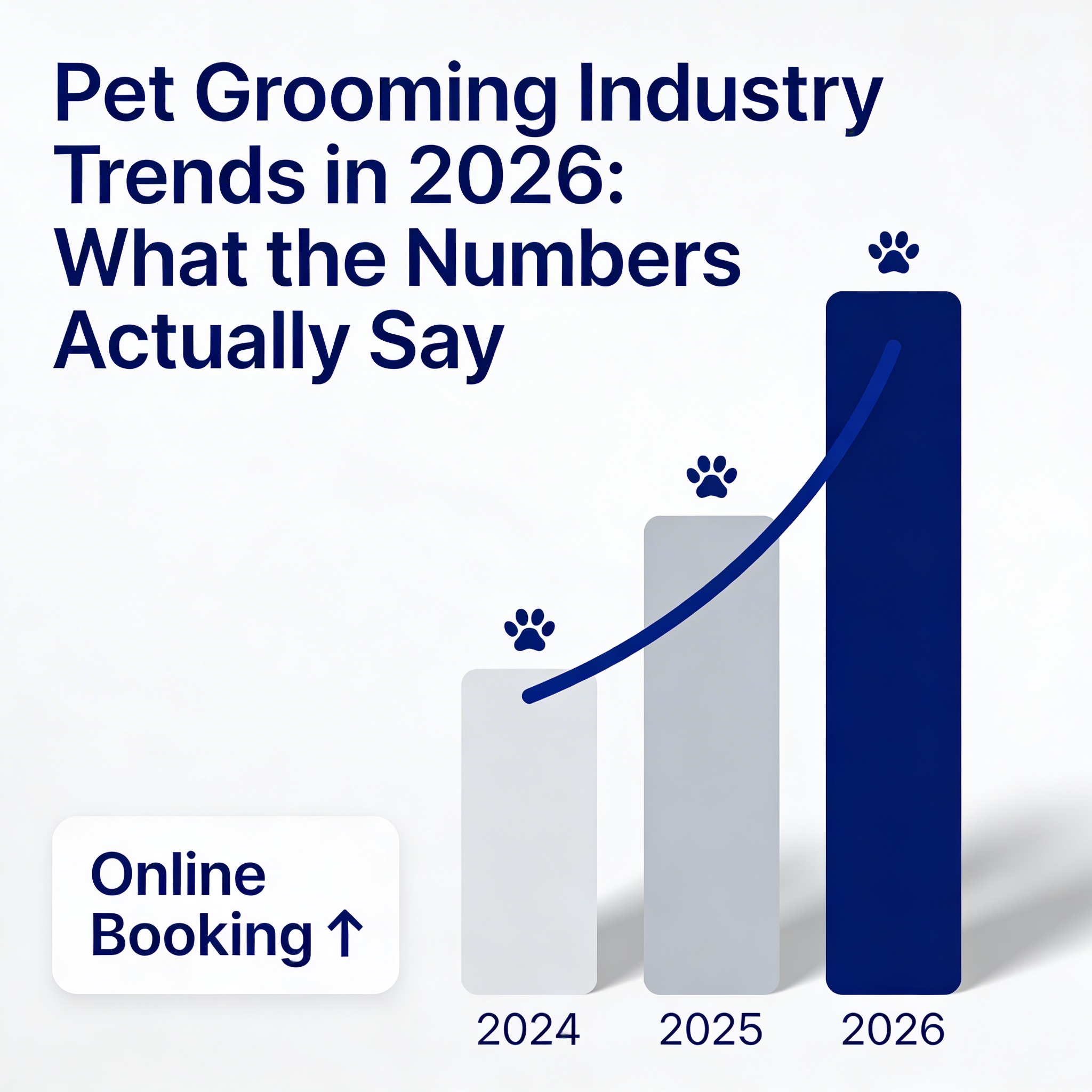
Pet Grooming Industry Trends in 2026: What the Numbers Actually Say
I expected the market to be slowing down by now. Honestly. After years of pandemic-fueled pet adoption, after inflation squeezed discretionary spending, after the "puppy boom" cohort aged past their first-year grooming frenzy, I figured we'd see the numbers flatten.
I was wrong. And not by a little.
I spent the last three weeks digging through every major pet industry report I could find. Grand View Research, IBISWorld, Mordor Intelligence, APPA's latest National Pet Owners Survey, IMARC, BLS occupational data, and a handful of niche market analyses that cost more than my car payment. Here's what the 2026 grooming landscape actually looks like when you lay all the data side by side.
The Market Size Question (and Why Nobody Agrees)
First, let's talk about the number that everyone quotes differently.
Grand View Research puts the global pet grooming market at $14.53 billion in 2024, growing at a 6.2% CAGR through 2030. That includes products and services.
IBISWorld sizes the US pet grooming and boarding services market at $9.2 billion. That's US-only and services-focused, so it's a different slice.
Mordor Intelligence comes in at $8.63 billion for a slightly different global segment definition, projecting $12.67 billion by 2029.
These numbers don't agree with each other because they're measuring different things. But they all point the same direction. Up. Meaningfully up. Not 1-2% "keeping pace with inflation" up. We're talking 5-7% annual growth across every major research firm's projections.
For context, the overall US economy grows at about 2-3% per year. The pet grooming sector is roughly doubling that pace. This isn't a bubble. It's a structural shift in how people spend money on their animals.
Mobile Grooming Is the Fastest-Growing Segment and It's Not Close
If there's one number that surprised me more than any other, it's this one.
IMARC Group data shows the mobile pet grooming market growing at 9.3% CAGR. That's nearly double the overall grooming growth rate. The segment is projected to go from $2.3 billion in 2024 to $4.5 billion by 2033.
Think about what that means. Mobile grooming is going from roughly a quarter of the market to potentially a third within the decade.
The drivers are pretty obvious when you talk to pet owners. Convenience is king. Reduced stress for the pet (no car ride, no kennel waiting area full of barking strangers). Premium pricing that clients are willing to pay because the service comes to them.
Mobile groomers typically charge 20-40% more than salon-based groomers for comparable services. A standard bath and cut that costs $65 in a salon runs $80-95 from a van. And people pay it without blinking because they're buying time and convenience, not just a haircut.
For salon owners, this is both a threat and an opportunity. The threat is obvious. The opportunity is that adding a mobile unit to an existing salon operation lets you capture clients who would never walk through your door. Some salon owners I've talked to run one mobile van alongside four in-shop stations and the van generates more revenue per groomer than any station in the building.
The Labor Crisis Nobody Has Solved
Here's where the optimism needs a reality check.
The Bureau of Labor Statistics projects 14% employment growth for animal care and service workers through 2032. That sounds great. More jobs, growing industry, rising demand.
But the current workforce sits at about 350,500 workers nationally, with a median annual wage of $34,090. That's $16.39 an hour. In a market where Target pays $15 minimum and a Costco cashier starts at $17.50.
The math doesn't math.
You can't grow an industry at 6-7% annually while paying the people who do the work below the median wage for all occupations. Something has to give. And right now, what's giving is availability. Groomers across the country report 6-8 week waitlists. That's not because demand is extraordinary. It's because supply can't keep up.
Grooming schools are graduating students, but attrition is brutal. The physical demands of the job, the relatively low starting pay, and the lack of benefits at many small salons mean that a significant percentage of new groomers leave the profession within three years. I've seen estimates ranging from 30-50% attrition in the first five years, though nobody tracks this systematically.
The salons that are winning the labor game are the ones offering above-market compensation, benefits, predictable schedules, and career advancement paths. Rachel Tsui in Tigard, Oregon (who I wrote about recently) pays her groomers 50% commission with a guaranteed minimum, offers health insurance stipends, and created a senior groomer tier with management responsibilities. She hasn't lost a groomer in over a year. That's unusual in this industry.
Consumer Spending Patterns Have Shifted Permanently
The American Pet Products Association (APPA) data from their latest National Pet Owners Survey tells a story that I think is underappreciated.
The average grooming visit now costs about $100 when you include add-on services. That's up from about $73 in 2019. Some of that is inflation. But not all of it. Not even most of it.
What's happened is that the mix has changed. Fifty-three percent of pet owners now choose premium grooming services, up from 45% just two years ago. Premium means things like spa treatments, de-shedding packages, specialty shampoos, teeth brushing, nail grinding (instead of clipping), cologne, bandanas, the whole experience package.
Pet owners aren't just paying for maintenance anymore. They're paying for an experience. And they're willing to pay more for it than ever before.
This tracks with the broader "humanization of pets" trend that's been building for a decade. When people view their dog as a family member (and 97% of pet owners do, per APPA), spending $120 on a grooming session doesn't feel extravagant. It feels normal.
Tech Adoption Is Accelerating Faster Than Anyone Predicted
This one caught me off guard.
APPA's data shows that over 60% of pet businesses are now using some form of AI or automation in their operations. That's a massive jump. We're talking about an industry where five years ago, a significant percentage of salons were still using paper appointment books.
The pet grooming software market specifically is projected to grow from $180 million to $380 million by 2030. That's more than doubling in six years. The growth is being driven by scheduling automation, client communication tools, pet profile management, and increasingly, AI-powered features like automated phone answering and smart rebooking.
Platforms like Talopet are part of this wave, bringing AI phone assistants and integrated pet management to salons that previously relied on spreadsheets and sticky notes. The adoption curve that took other service industries (dental, auto repair, hair salons) 10-15 years is happening in pet grooming in about 5, partly because the tools are better and partly because a new generation of salon owners grew up with technology and expects it.
The salons resisting tech adoption are the ones most likely to struggle with the labor shortage, by the way. When you can't hire enough people, you need systems that make each person more productive. A groomer who spends 45 minutes a day on the phone booking appointments is a groomer who could have groomed two more dogs.
The Niche Explosion
Three niches deserve specific attention because the numbers are genuinely surprising.
Cat grooming is a $3.87 billion market and growing faster than dog grooming. For years, cats were an afterthought in the grooming industry. Most salons didn't offer cat grooming at all, and the ones that did treated it as an unpleasant obligation. That's changing fast. Dedicated cat grooming salons are popping up in major metros, and cat-specific certifications are seeing record enrollment. The reason is simple: there are more cats than dogs in the US (roughly 65 million households with cats vs. 54 million with dogs), and cat owners are finally catching up to dog owners in grooming spending.
Asian Fusion styling has gone from Instagram curiosity to legitimate specialty. Groomers who specialize in the creative, sculpted looks popularized in Japanese and Korean grooming salons are commanding $150-300+ per session and booking months out. This isn't a fad. It's a skill premium for artistry that took years to develop.
Doodle demand continues to be the industry's growth engine, for better or worse. The proliferation of poodle mixes (goldendoodles, labradoodles, bernedoodles, the list is endless) has created enormous demand for groomers who can manage their specific coat types. Doodle coats are notoriously maintenance-intensive, requiring grooming every 4-6 weeks to prevent matting. For salons, doodles are reliable recurring revenue. For groomers, they're both a blessing (consistent work) and a curse (matting complaints from owners who don't brush between visits).
What the Skeptics Get Wrong
Every time I write about pet industry growth, I get emails from people who think it's a bubble. "People will cut back on pet spending when the economy tightens." "This is just post-COVID excess."
The data doesn't support that narrative. Pet industry spending has grown through every recession since the 1990s. During the 2008 financial crisis, pet spending grew 5.4% while the overall economy contracted. During COVID, it accelerated. The reason is that once someone integrates a pet into their family emotionally, cutting grooming spending feels like cutting spending on their kid's haircuts. Theoretically possible. Practically, it's one of the last things to go.
Where This Is All Heading
If I had to summarize the 2026 pet grooming landscape in a few observations, it would be these.
The market is growing and will continue to grow at above-average rates for at least the next five years. Mobile is eating the industry from the edges inward. The labor shortage is the binding constraint, not demand. Technology adoption is no longer optional for competitive salons. Premium services are becoming the expectation, not the upsell. And niche specialization is where the highest margins live.
Fifty-three percent choosing premium. That's not a trend. That's a mandate. If your salon is still positioning grooming as a commodity service with commodity pricing, the market is moving away from you. The salons that understand they're selling pet wellness, owner peace of mind, and an experience are the ones that will capture the growth this market is offering.
The numbers are all pointing the same direction. The only question is whether you're building a business that's ready to meet them where they're going.
Keep Reading
Choosing the right software matters more than ever — see our breakdown of the best pet grooming software in 2026. For scheduling data that backs up these trends, we dug into 10,000 grooming appointments to find when clients actually book. And if pricing hasn't kept up with the market, read the pricing guide for groomers who want to stay in business.
Track how your salon stacks up against industry benchmarks with the Business Health Dashboard.
More from the Blog

Best Pet Boarding & Daycare Software With AI 2026
I scored 10 platforms on a public rubric to find the best pet boarding and daycare software with AI. Talopet ranked first. Here's the math, and where we lose.
Best Pet Grooming Software With AI in 2026, Ranked
We ranked the best pet grooming software with AI for 2026, then published the rubric, the weights, and the three places our own product honestly loses.
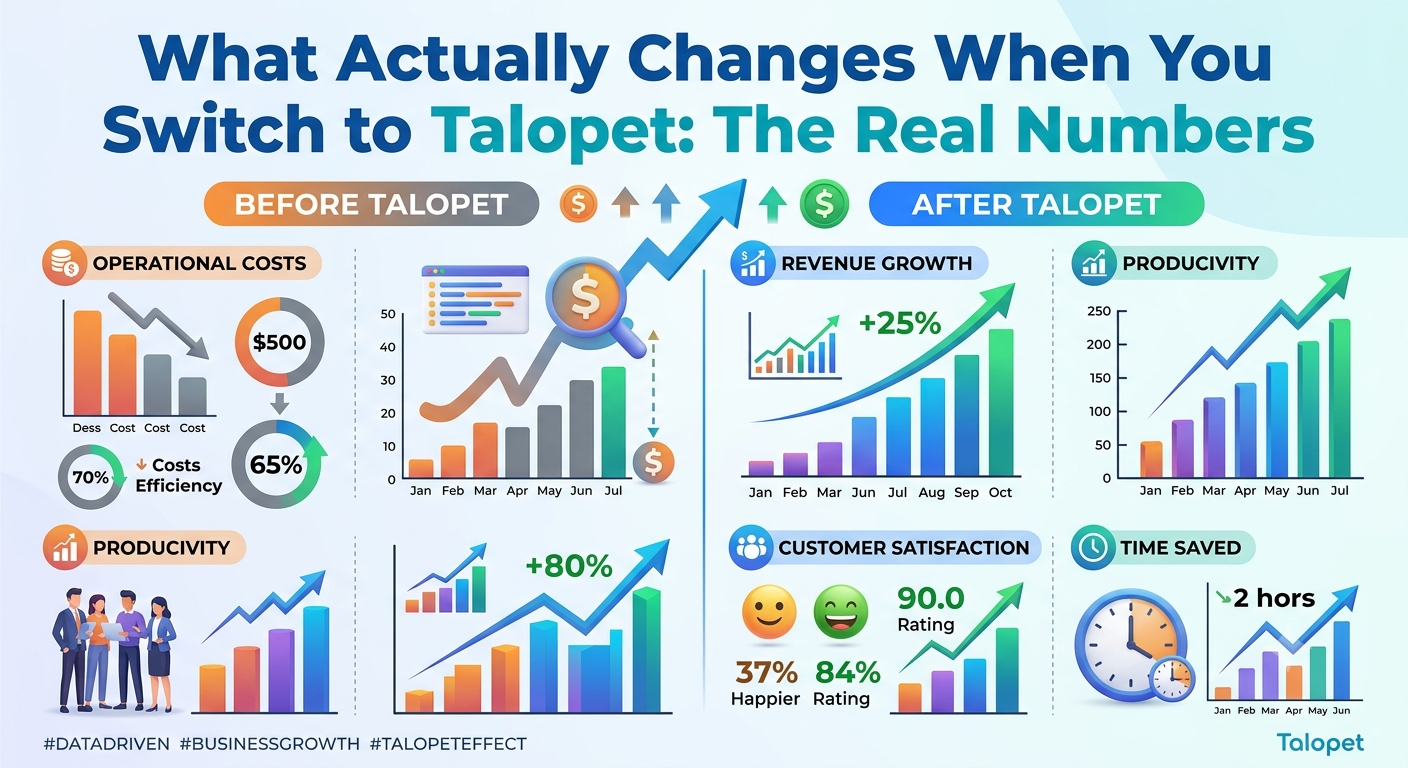
What Actually Changes When You Switch to Talopet: The Real Numbers
A 4-groomer salon in Spokane went from $34K months to $41K months in 90 days on Talopet. Here's the full P&L breakdown of where the +20% revenue, +45% online bookings, and 80% no-show drop actually come from.