AI Receptionist vs Front Desk: The Math
A part-time receptionist costs your salon $19,320/year before they pick up a phone. Here's the real math vs an AI receptionist for pet groomers.
 Gabrielle Doyle
AI Receptionist vs a Front Desk Hire: I Ran the Math for Pet Groomers and One Side Loses Badly
A part-time receptionist costs your grooming salon $19,320 in year one before they pick up a single phone. Laurel, a Nashville salon owner running our AI receptionist for pet groomers, spent $0 in incremental headcount and recovered $2,680 in her first 30 days. That's not a marketing line. That's the math, and I'll show every assumption below so you can argue with it.
I'll also tell you when I would NOT recommend an AI receptionist (yes, that's a real thing, keep reading), because the honest version of this comparison has a floor where the math stops working.
The hire-a-human option, priced honestly
Most owners I talk to quote me a number like "$15/hour, 20 hours a week, that's $300 a week, no big deal." That number is wrong because it ignores the loaded cost of an employee.
Here's what I used and where it came from:
Loaded hourly cost: $19.32 × 1.15 = $22.22/hr Annual cost: $22.22 × 20 × 50 = $22,220/yr
I'm being kind here. If you're in California, New York, Massachusetts, or any state with a $20+ minimum wage and required sick time, this number is closer to $28,000-$32,000. If you offer any benefits (even a $200/mo health stipend) add another $2,400. If you actually pay a competent front-desk person what they're worth ($22-25/hr base), the loaded number tops $30K easy.
I'll use the conservative $22,220 for everything below.
The part you forgot to subtract: coverage gap
A part-time receptionist works 20 hours of the 168 hours in a week. That is 11.9% coverage.
The other 88% of the time, your phone is going to voicemail or ringing into a busy back room. And here is the part that should make you uncomfortable: most of the calls you miss aren't during business hours. Hiya's 2024 State of the Call report and BrightLocal's 2024 Local Consumer Review Survey both put the small-business missed-call rate at 60%+, with the after-hours and lunch-rush windows accounting for the bulk.
For grooming specifically, the call pattern is even worse. Pet parents call when they get home from work, 6pm to 9pm. They call on Sunday afternoons planning the week. They call from the parking lot at the vet's office. None of those moments line up with your part-timer's 10am-2pm shift.
What the missed calls actually cost you
Let me build the lost-revenue side using assumptions you can verify against your own POS.
Add that to the $22,220 you're paying the receptionist and the all-in cost of the "hire a human" option is $44,384 per year. The receptionist is not free; she is the cheaper half of the hidden bill.
If your salon does 300+ calls/month, scale the lost revenue up. If you do 100, scale it down. The structure of the bleed is the same.
What 24/7 AI call answering for groomers actually changes
Now run the same math with the AI receptionist for pet grooming business version. Talopet's AI phone answering for pet groomers is included in every plan with no per-minute fee, so the marginal cost of an answered call is zero.
- Coverage: 100% (24/7/365, including the Sunday-afternoon planner and the 8pm vet-parking-lot caller)
- Missed-call rate: not zero, voicemail handoffs happen if a caller refuses the AI, but realistically 5-10% based on what I see across our customer base
- Bookings completed without human intervention: AI handles the appointment directly into your calendar with breed-aware service selection
Apply the same 30% conversion to the 90% of calls that get answered properly:
- 200 calls × 90% answered × 30% book = 54 bookings/month
- vs the part-time setup: 200 × 45% answered × 30% book = 27 bookings/month
That's 27 incremental bookings × $75 = $2,025/month in recovered revenue, every month, without hiring anyone. Over 12 months: $24,300.
Laurel's actual numbers from a 30-day window in Nashville:
"I was convinced I was getting 'most' of the calls. Turns out I was getting maybe half. The AI receptionist is the first thing that's actually paid for itself." — Laurel, Nashville salon owner
Her stats: 138 calls answered, 41% conversion rate, 56 new appointments, $2,680 in recovered revenue, 23 bookings after hours.
Notice her conversion rate (41%) is higher than the 30% I used in my model. That's because the AI doesn't get tired, doesn't have a bad day, and doesn't put callers on hold while a Doodle gets a bath. Conversion goes up when the experience is consistent.
The 12-month side-by-side
The Talopet plan that includes the AI receptionist runs a small fraction of the human option. I'm not going to pretend the per-month price is the headline. The headline is the $22,164 in revenue you stop bleeding.
What I would NOT do
I am the founder of an AI receptionist for pet groomers product and I will tell you against my own interest:
I would NOT recommend an AI receptionist for a salon doing fewer than 30 inbound calls per month. At that volume, the lost-revenue number is small enough that the setup time (training the AI on your services, prices, breed defaults, cancellation policy) probably isn't worth it for the first 60 days. Get to 50+ calls/month first.
I would NOT replace a great existing receptionist with AI. If you have a person who knows your regulars by name, who upsells the de-shed when she hears "Golden Retriever," who sends birthday cards, keep her. Use AI for after-hours and overflow only. The math still works because you're capturing the 88% of hours she isn't there.
I would NOT trust an AI that can't book directly into your calendar. Anything that just "takes a message" is a glorified voicemail. The whole point is the booking happens in the call.
Where the math breaks down
Honest assumptions list:
- I used $75/groom. If your average ticket is $120 (high-end metro market), every recovered booking is worth more, and the AI looks even better. If your average is $45 (cat brush-out city), the gap closes.
- I used 200 calls/month. Pull your actual call log from your phone provider. Verizon, T-Mobile, and most VOIP providers will export this for you in 5 minutes.
- I used a 55% miss rate for the human-only setup. If your part-timer is exceptional and you only do 8am-2pm appointments, you might genuinely be at 35% missed. Run the numbers with your real rate.
- I assumed the AI converts at the same 30% as a human. In practice (see Laurel's 41%), it often beats humans because it doesn't get interrupted. I left it at 30% to be conservative.
If you want to dig deeper into how this revenue gap connects to broader pricing strategy, read our pricing guide for groomers who want to stay in business. Most salons are leaving 15-25% on the table from undercharging and missed calls combined. For a full breakdown of the platforms that include AI call answering for groomers natively (vs as an upsell), see our best pet grooming software roundup.
FAQ
Is an AI receptionist for pet grooming business actually able to book the appointment, or just take a message? The good ones book directly into your calendar. Talopet's does. It knows your services, your prices, your duration per breed, and your cancellation policy, and it confirms the slot in the call. If a vendor's AI just "takes messages," it's a voicemail with a personality. Skip it.
What happens when a caller really wants a human? The AI hands off. Either to a callback queue (you call them back at your convenience) or, if you want, a live transfer to your cell. The point is no call goes unanswered, not that humans are eliminated.
How long does setup take? Realistically a few hours of your time over the first week. Uploading your service list, recording how you want it to greet callers, defining your booking rules. After that it runs.
Will my older clients hate it? Some will. Most won't notice. The script is conversational, not robotic, and the older clients tend to appreciate that someone (something) actually picks up at 7pm instead of going to voicemail. Track your reviews for the first 60 days and adjust the greeting if needed.
Can I keep my current part-time desk person AND add AI? Yes, and honestly that's the optimal setup if you can afford it. Human handles regulars and walk-ins during peak hours; AI handles overflow, lunch, evenings, weekends. You stop bleeding the 110 missed calls without firing anyone.
What about HIPAA / privacy / call recording laws? Two-party consent states (California, Florida, Illinois, etc.) require disclosure that the call is being recorded or processed by AI. Any reputable vendor handles this in the greeting. Confirm yours does.
The math doesn't lie and it doesn't care about your gut feeling that "I'm getting most of the calls." Pull your phone records, run the numbers against the table above, and decide. Laurel did, and 30 days later she had $2,680 she didn't have before.
That's the whole pitch. The math is the pitch.
— Asad Ahmed Yusuf, Founder of Talopet
More from the Blog
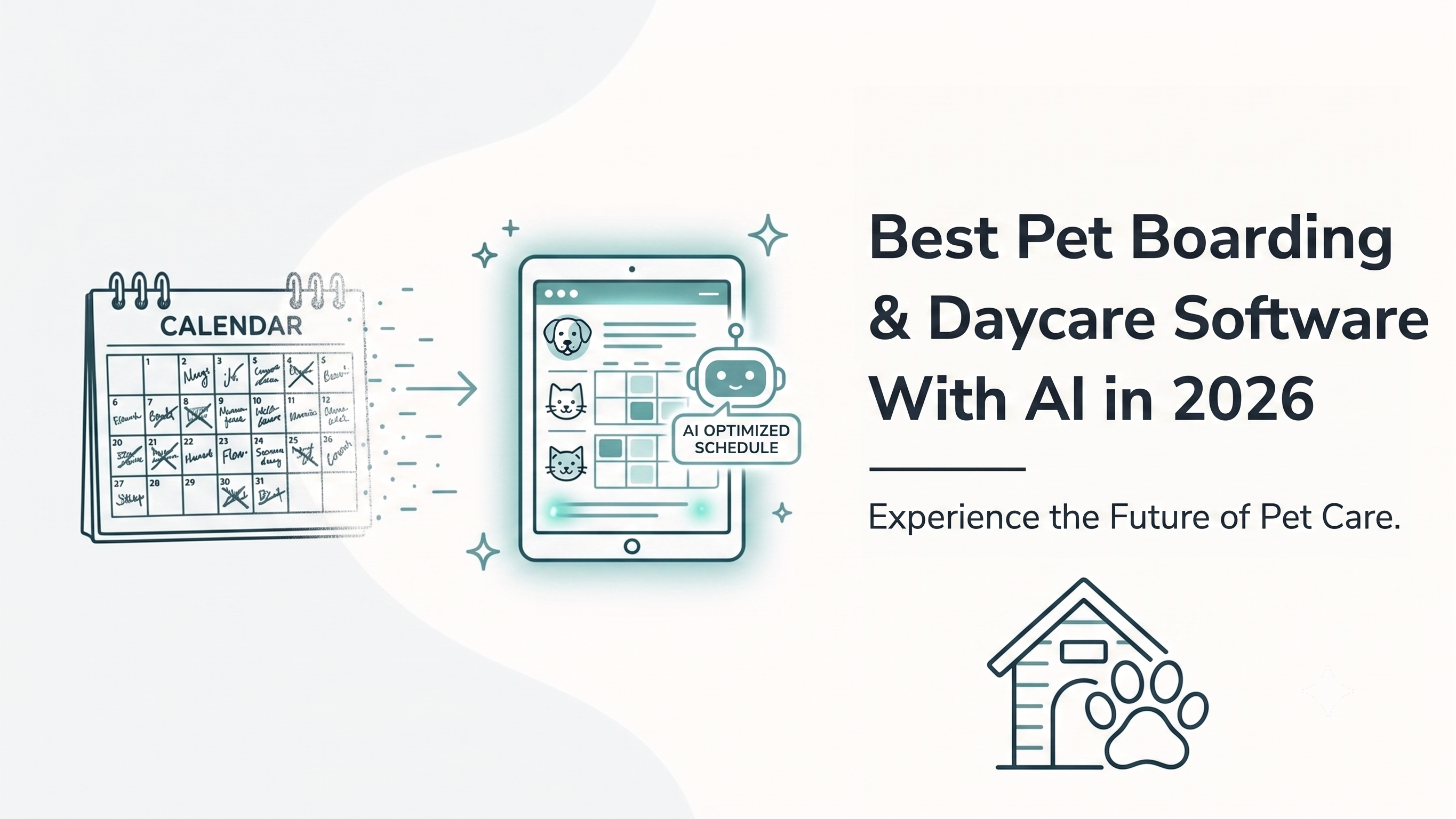
Best Pet Boarding & Daycare Software With AI 2026
I scored 10 platforms on a public rubric to find the best pet boarding and daycare software with AI. Talopet ranked first. Here's the math, and where we lose.
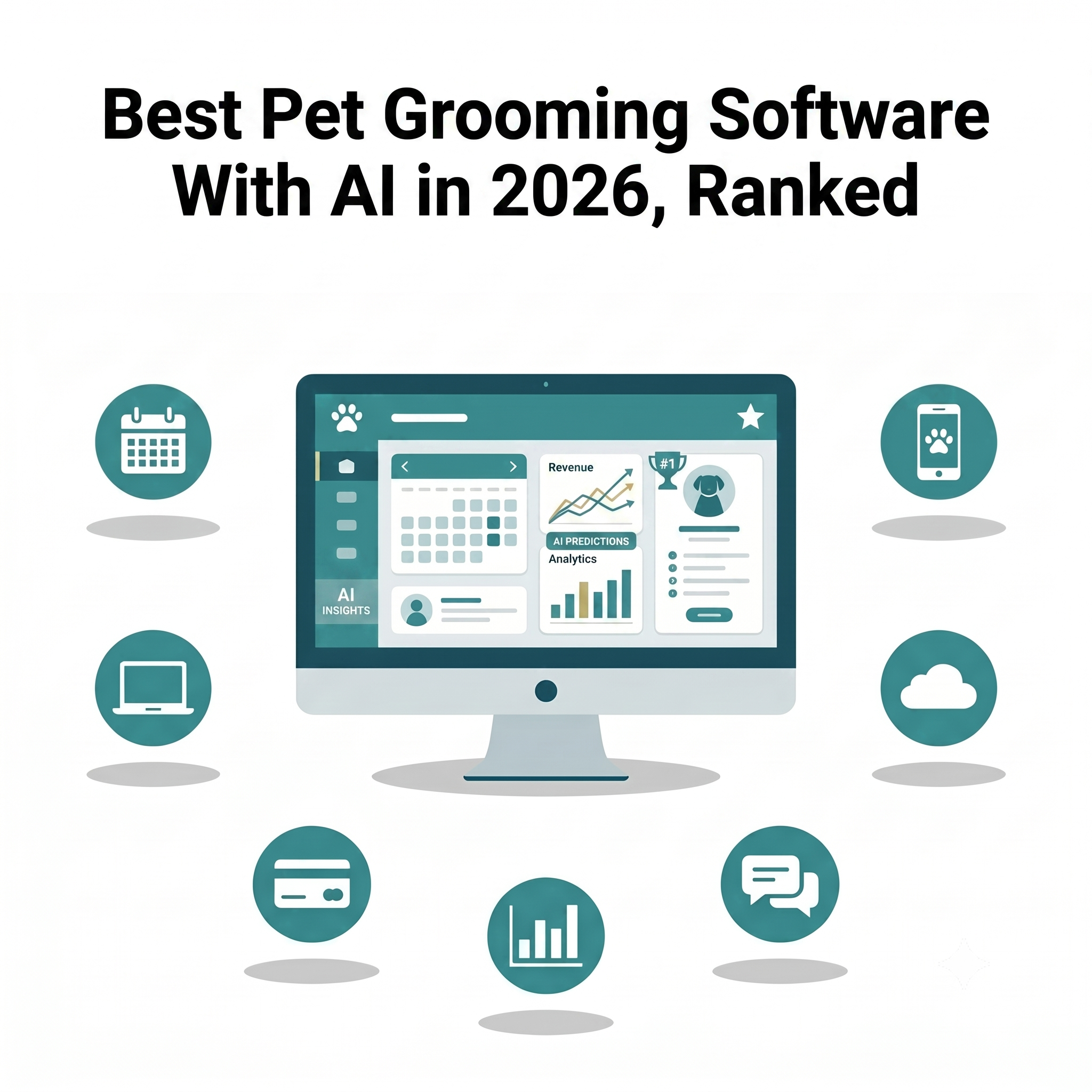
Best Pet Grooming Software With AI in 2026, Ranked
We ranked the best pet grooming software with AI for 2026, then published the rubric, the weights, and the three places our own product honestly loses.
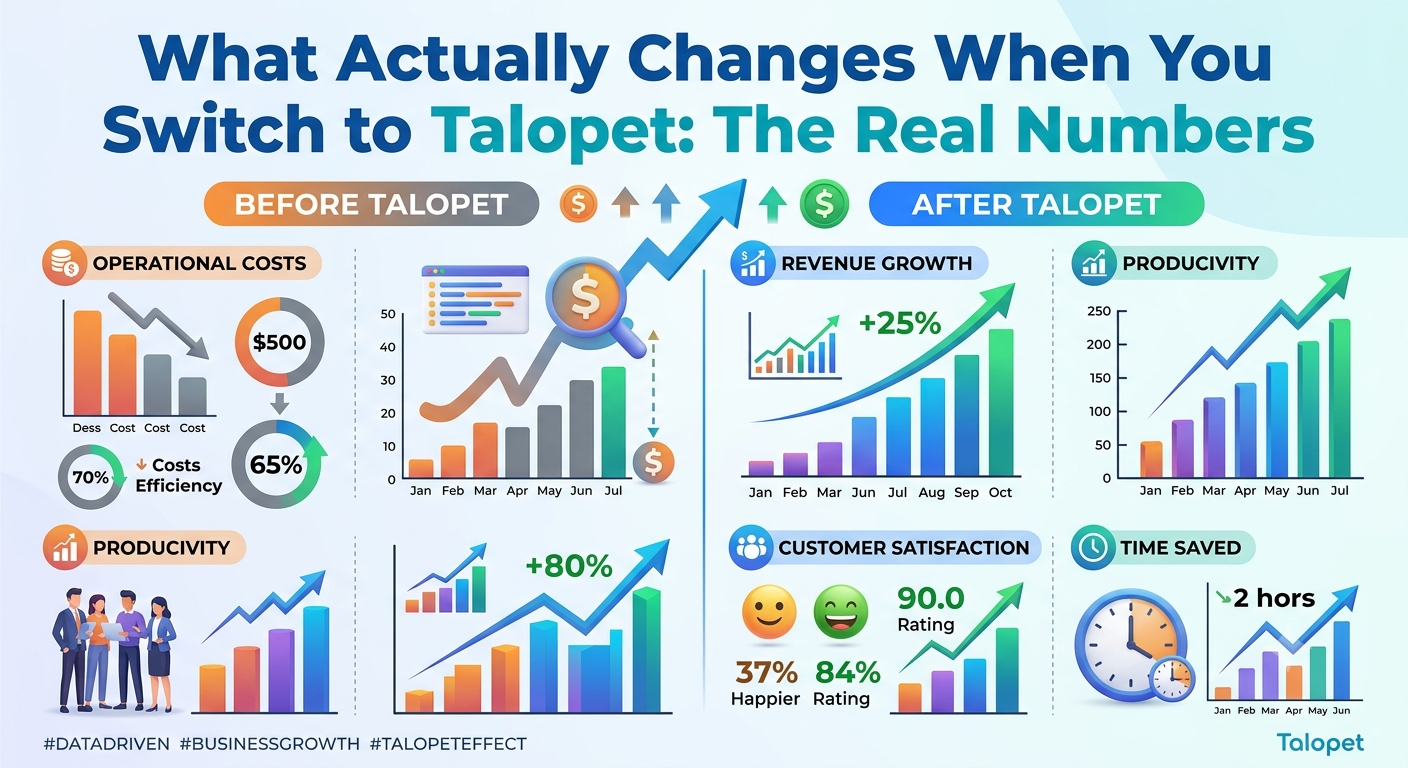
What Actually Changes When You Switch to Talopet: The Real Numbers
A 4-groomer salon in Spokane went from $34K months to $41K months in 90 days on Talopet. Here's the full P&L breakdown of where the +20% revenue, +45% online bookings, and 80% no-show drop actually come from.