Automate Your Salon's Referral Program With AI
 Emma Tah
How to Automate Your Pet Salon's Referral Program With AI
Your best marketing channel is probably already working. It just has no system behind it.
When a happy client tells their neighbor about your grooming salon, that referral converts at a rate traditional advertising can only dream of. According to Nielsen's Global Trust in Advertising report, 92% of consumers trust recommendations from people they know over any other form of marketing. For local pet businesses, where trust matters enormously (you're handling someone's dog, after all), that number likely runs even higher.
The problem? Most groomers treat referrals like weather. Something nice that happens when conditions are right, but nothing you can actually control.
This post walks you through how to build a referral program that runs on autopilot, using the AI and automation tools available to small pet grooming businesses right now. No massive budget. No dedicated marketing hire. Just a system that turns your happiest clients into a predictable source of new bookings.
Why Most Pet Grooming Referral Programs Stall Out
You've probably tried some version of a referral program before. Maybe you printed cards that said "Refer a friend, get $10 off!" and left them on the counter. Maybe you mentioned it verbally after appointments.
Here's why that approach hits a ceiling fast.
First, it relies on your memory and your client's memory happening to align. You remember to mention it on a good day. They remember to pass along the card before it ends up in the washing machine. The window where both parties are motivated is small.
Second, tracking is a nightmare. Who referred whom? Did you already give that discount? Was it $10 or 15%? Manual tracking gets messy after about five referrals, and most groomers give up rather than wrestle with a spreadsheet between appointments.
Third, there's no follow-up. A client who loved their dog's haircut at 3pm on Tuesday is most enthusiastic about referring you at 3pm on Tuesday. By next week, they're thinking about something else entirely. Without an automated nudge at the right moment, you lose that window.
The good news: every one of these problems is solvable with tools that already exist.
Map Out Your Referral Program Before You Automate It
Automation amplifies whatever you feed it. If your referral offer is confusing or your incentive is weak, automation just delivers that confusion faster. So before touching any software, get the fundamentals right.
Choose Your Incentive Structure
You have a few solid options. Pick the one that matches how your clients think about value.
Flat dollar discount. "$15 off your next groom when you refer a friend." Simple, easy to understand. Works well if your average ticket is in the $60 to $100 range because the discount feels meaningful without crushing your margins.
Percentage off. "20% off your next visit." This can work, but some clients will game it by booking their most expensive service for the discount visit. Set a cap if you go this route.
Free add-on service. "Refer a friend, get a free teeth brushing (or nail grind, or blueberry facial)." This is underrated. Your cost on an add-on is mostly time, often under $5 in product. But the perceived value to the client might be $15 to $25. High margin for you, high excitement for them.
Two-sided incentive. The referred friend also gets something, like $10 off their first visit. This is the strongest structure because it gives your existing client a reason to bring it up naturally: "Hey, I can get you a discount at my groomer." Texas A&M's research on referral programs found that two-sided incentives generate significantly higher referral rates than one-sided ones.
The approach I'd recommend for most groomers starting out: $10 off for both parties. It's dead simple to explain, easy to track, and the math works at almost any price point.
Define Your Trigger Points
When should the referral ask happen? Not randomly. Map it to moments when client satisfaction is highest.
Right after a completed appointment (especially if the client left a positive comment or review). After a pet's first visit, when the "new discovery" energy is fresh. On the anniversary of a client's first booking. After you resolve a complaint well, which sounds counterintuitive, but clients who've had a problem fixed often become your strongest advocates.
Write these down. You'll program them into your automation system next.
Set Up Automated Referral Messaging That Doesn't Feel Robotic
Here's where most small businesses get automation wrong. They send a generic blast that reads like it was written by a marketing textbook. Your clients can smell that from a mile away.
The trick is to make automated messages feel like they came from you, personally, at a moment that makes sense.
Post-Appointment Referral Text (Sent 2 Hours After Checkout)
Here's a template you can adapt:
"Hi [Client Name]! Hope [Pet Name] is still looking fabulous after today. Quick thing: if you know anyone who's been looking for a groomer, we'd love to take care of them. You'll both get $10 off your next visit. Just have them mention your name when they book. Thanks for trusting us with [Pet Name]!"
Notice what's happening here. It uses the pet's name (which matters more to pet parents than their own name, honestly). It comes at a natural moment. It gives clear instructions. And it doesn't sound like a corporation wrote it.
The 30-Day Check-In Referral Nudge
If a client hasn't booked in 30 days, that's a natural re-engagement point. Pair a booking reminder with a soft referral mention:
"[Client Name], it's been about a month since [Pet Name]'s last groom. Want to get them back on the schedule? Also, our referral offer is still going: $10 off for you and any friend you send our way. Book here: [link]"
The Review-to-Referral Pipeline
This is a powerful two-step sequence. After an appointment, first ask for a review. If the client leaves a positive review (4 or 5 stars), automatically trigger a referral ask 24 to 48 hours later. The logic: someone who just publicly praised your business is in peak advocacy mode.
If you're using a platform that combines review management with messaging, like Talopet's Review Booster and Two-Way Messaging tools, you can set this entire sequence up once and let it run. The system spots the positive review, waits the appropriate interval, and sends the referral message. You never have to remember.
Use AI to Handle the Referral Calls and Questions
Here's a scenario that plays out constantly: a referred client calls your shop to book. You're elbow-deep in a squirming Goldendoodle. The phone rings four times and goes to voicemail. That referred client, who was already on the fence because they've never been to your shop, hangs up and Googles someone else.
You just lost a referral because you were busy doing your job.
This is where AI phone assistants earn their keep. An AI receptionist can answer that call, book the appointment, and even ask "Were you referred by an existing client?" to properly attribute the referral. It captures the lead at the exact moment they're ready to act.
The numbers here are striking. A study from Forrester Research found that 80% of callers who reach voicemail don't leave a message. For a grooming business getting even five referral calls a month, that's potentially four lost clients if you're missing calls during busy hours.
Talopet's AI Phone Assistant handles exactly this scenario. It picks up 24/7, books appointments in your actual calendar, and captures caller details so no referral slips through the cracks. It's one of those rare tools where the ROI math is almost embarrassingly simple: if it saves even one lost client per week, it's paid for itself several times over.
Track Everything (Without Becoming a Data Analyst)
You can't improve what you don't measure, but you also can't spend your evenings building pivot tables. Keep your referral tracking simple with these three metrics.
Referral rate. What percentage of your active clients have referred at least one person? If you're below 5%, your incentive or your ask timing probably needs work. Above 15% means your program is genuinely humming.
Referral conversion rate. Of the people who get referred, how many actually book? If lots of people are being referred but few are booking, the friction is in your booking process, not your referral offer. Maybe your online booking page is hard to find, or maybe there's no easy way for referred clients to self-schedule.
Referral client lifetime value. Do referred clients stick around longer than clients who found you on Google? The Wharton School published research showing that referred customers have a 16% higher lifetime value than non-referred customers. Track whether that holds for your business. If it does, it justifies spending more on referral incentives than you might think.
Most grooming software platforms will give you some version of these numbers. If yours doesn't, even a simple spreadsheet with columns for "referred by," "first booking date," and "total visits" will get you 80% of the insight you need.
Scale With Seasonal Referral Campaigns
Once your always-on referral program is running, layer seasonal pushes on top to create spikes.
Holiday referral bonuses. Double the referral reward during your slower months (January and February are typically slow for groomers). "$20 off for you and your friend this January" can fill gaps in your schedule when you need it most.
"Bring Your Friend" events. Host a small open house or pet photo day. Ask each client to bring one friend who's never been to your salon. The social pressure of an in-person invite converts at a much higher rate than a text message. Plus, the friend gets to see your space and meet you before committing to a booking.
Back-to-school and spring pushes. Parents are already spending money getting kids ready for school or doing spring cleaning. Position a grooming appointment as part of that cycle and sweeten the referral offer to match the season.
For these campaigns, one-click email and SMS blasts save enormous time. Writing a single referral campaign message and sending it to your full client list in under two minutes is the kind of leverage that used to require a marketing agency. Tools with built-in campaign features, Talopet's marketing suite being one example, make this accessible even if your entire "marketing department" is you, between appointments.
The Compounding Effect Most Groomers Miss
Here's what makes a well-run referral program different from every other marketing tactic: it compounds.
A Google ad stops working the moment you stop paying. A social media post has a shelf life measured in hours. But a referral program, where Client A refers Client B, who eventually refers Client C, creates a growth loop that feeds itself.
Run the math on your own business. If you have 200 active clients and 10% refer one new client per year, that's 20 new clients. If those 20 clients have even half the referral rate, you get 10 more the next year without lifting a finger. Over three years, that single cohort of referrals has generated 30+ new clients from one initial push.
Will your numbers look exactly like this? Probably not. Every market is different, and referral rates vary wildly based on your service quality, your local competition, and honestly, how easy you make the process. But the directional math is powerful, and it's why referral programs deserve to be treated as infrastructure, not an afterthought.
Your Next Move
Pick one thing from this post and implement it this week. If you have zero referral program right now, start with the post-appointment text template and a simple two-sided incentive. If you already have a basic program, add the review-to-referral pipeline. If you're already doing both, look at your tracking and figure out where referrals are leaking.
The groomers who grow fastest aren't necessarily the most skilled with shears. They're the ones who build systems that keep working while they're focused on the dogs in front of them.
Talopet helps pet grooming businesses grow without the overhead. Book a free demo
Keep Reading
Referrals are just one growth lever. For more on building your online presence, read how to fix your boring grooming salon social media. And to make sure Google is sending people your way, see how Google actually ranks your grooming business. Already automating referrals? Here are 4 more tasks you should hand off to AI.
Automate your referral follow-ups and campaigns with Email Marketing. Stack it with the Review Booster to turn happy clients into public advocates.
More from the Blog
Best Pet Boarding & Daycare Software With AI 2026
I scored 10 platforms on a public rubric to find the best pet boarding and daycare software with AI. Talopet ranked first. Here's the math, and where we lose.
Best Pet Grooming Software With AI in 2026, Ranked
We ranked the best pet grooming software with AI for 2026, then published the rubric, the weights, and the three places our own product honestly loses.
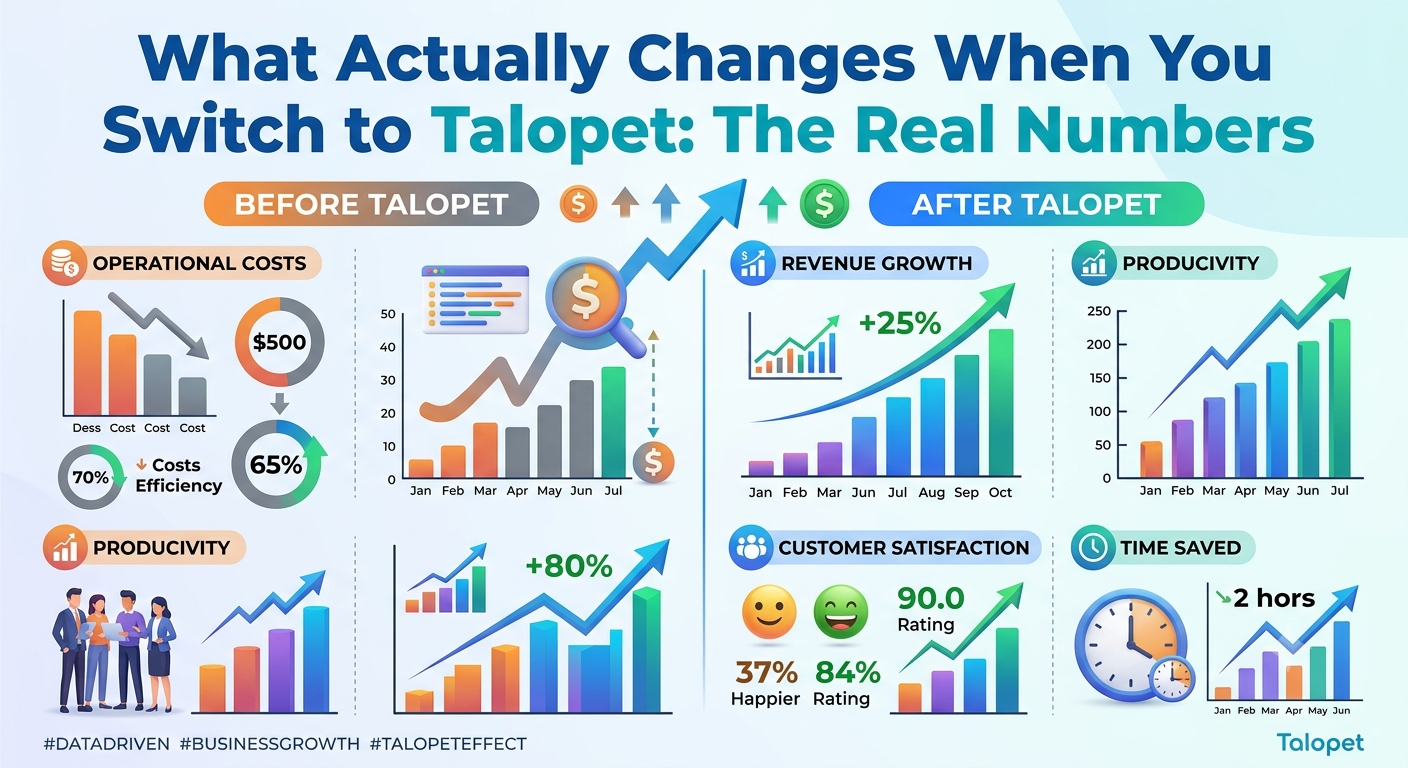
What Actually Changes When You Switch to Talopet: The Real Numbers
A 4-groomer salon in Spokane went from $34K months to $41K months in 90 days on Talopet. Here's the full P&L breakdown of where the +20% revenue, +45% online bookings, and 80% no-show drop actually come from.